Residency Program
Pediatric Residency Program
Application Deadline | December 1, 2025
Next Start Date | July 1, 2026
Our PHM program began in 2017. It is among the first of the ACGME-accredited PHM fellowship programs in the country. We are committed to training pediatric hospitalists for careers in academic medicine or in a community hospital setting with a strong focus on education. We have a 100% PHM board exam pass rate.
The Pediatric Hospital Medicine Fellowship Program at Texas Tech University Health Sciences Center aims to produce pediatric hospitalists who:
- Will be experts in caring for hospitalized children with a variety of acute and chronic conditions
- Will be proficient in core skills essential to the care of hospitalized children
- Will be academically productive, generating new knowledge and scholarship in areas such as education, quality improvement, performance improvement, clinical informatics, clinical research, and health services research
- Will be future leaders in hospital administration, quality, and value-driven health care
Faculty within our division include:
- CMO of the Children's Hospital
- Vice Dean of Covenant campus Medical Students
- Leaders of the organized medical staff
- Pediatrics clerkship director
- Director for the fourth-year curriculum for the school of medicine
- Director of year 4 courses in pediatrics
- Leaders in quality improvement and heath information technology at our clinical sites
Information for Applicants
Our program offers clinical training at Covenant Children’s Hospital, a freestanding children’s hospital and our primary teaching site.
- The hospital has 144 pediatric beds, and approximately 3000 patient discharges per year.
- The hospitalist service is the admitting service for most medical subspecialties as well as the general inpatient service.
- The team also co-manages surgical patients with surgical subspecialists and cares for floor status as well as intermediate care status patients.
- Fellows have the opportunity to rotate at our community hospital partner, University Medical Center, as well as our pediatric inpatient rehabilitation facility, TrustPoint Hospital.
When the fellow is on the hospitalist service, responsibility and independence will increase iteratively. The focus will be not only on clinical skills but also teaching skills.
Our program follows the national standardized curriculum with one-third of the fellowship time spent on core clinical rotations including hospitalist service, medically complex care, surgical co-management and community hospital service. One-third of the curriculum provides time for scholarship and QI activities. The remaining third comprises the individualized curriculum which may be tailored to the fellow’s individual career interests.
Curriculum Overview
| 8 Blocks | Pediatric Hospital Medicine Service (including 1 block of community PHM completed longitudinally) |
| 8 Blocks | Scholarship |
| 8 Blocks | Individualized Curriculum |
Sample Schedule
| Block 1 | Orientation / Welcome | Scholarship |
| Block 2 | Scholarship | PHM Service |
| Block 3 | PHM Service | Individualized Curriculum |
| Block 4 | Scholarship | PHM Service |
| Block 5 | PHM Service | Scholarship |
| Block 6 | Scholarship | Scholarship |
| Block 7 | PHM Service | Individualized Curriculum |
| Block 8 | Scholarship | PHM Service |
| Block 9 | Individualized Curriculum | Individualized Curriculum |
| Block 10 | PHM Service | Individualized Curriculum |
| Block 11 | Individualized Curriculum | Individualized Curriculum |
| Block 12 | Individualized Curriculum | Individualized Curriculum |
| Block 13 | Scholarship | Individualized Curriculum |
Vacation is taken during Individualized Curriculum blocks. Community PHM rotation occurs longitudinally in the second year.
1 Year = 13 blocks
1 Block = 4 Weeks
The Individualized Curriculum is meant to be tailored to the fellow’s individual career interests. Elective opportunities include Anesthesia/Sedation, Cardiology, Child Abuse & Neglect, ED, GI, Hematology/Oncology, Infectious Disease, Neurology, Newborn Medicine, NICU, Palliative Care, PICU, Pulmonology, Rehabilitation medicine, Radiology, Surgical subspecialties, Transport medicine, Medical education leadership, Hospital leadership, and additional research experiences.
- Salary: PGY4 $72,532.92; PGY5 $74,685.79 (2025-2026 academic year)
- Vacation: Vacation may be taken during blocks dedicated to scholarship and during elective blocks. Vacation policies are governed by the TTUHSC GME policies.
- Sick Leave: Sick leave policies are governed by the TTUHSC GME policies.
- Holiday Schedule: All members of the Division of Inpatient Medicine (including the fellow) receive eight consecutive days off during the 2 week period surrounding Christmas and New Year’s.
- Medical Insurance: Fellow is covered at no cost to the employee; $163.97 Employee + Spouse; $115.61 Employee +Child(ren); $274.49 Employee + Family **Monthly Deduction rates subject to change**
- Vision, Dental Insurance: Premiums 100% paid for by TTUHSC.
- Life Insurance: Employee $100,000; Spouse $10,000; Child(ren) $5,000. Premiums 100% paid for by TTUHSC.
- Disability Insurance: Long Term $1,500. Premium 100% paid for by TTUHSC.
- Malpractice Self Insurance: Premiums 100% paid for by TTUHSC.
- Retirement Savings: Eligible for 403B Plan.
- Parking: Free Hospital Parking.
- Advanced Degree Opportunities: Although not a formal part of the PHM fellowship, if a fellow desires to pursue additional education during their fellowship, scheduling flexibility exists to accommodate a higher educational opportunity. Master programs available through Texas Tech University include:
Fellows will rotate through various clinical and non-clinical experiences every four weeks throughout the training period.
Curriculum Overview
| 4 Blocks | Inpatient Hospital Service |
| 0.5 Blocks | Community-based Hospital Medicine |
| 0.5 Blocks | Pediatric Intensive Care Unit, Sedation |
| 4 Blocks | Electives (individualized Curriculum) |
| 4 Blocks | Scholarship/QI/Administration |
Sample Schedule
| Block 1 | Hospitalist Service |
| Block 2 | Scholarship/QI/Administration |
| Block 3 | Scholarship/QI/Administration |
| Block 4 | Scholarship/QI/Administration |
| Block 5 | Hospitalist Service |
| Block 6 | PICU/Sedation/Inpatient Rehab |
| Block 7 | Hospitalist Service - Nights |
| Block 8 | Infectious Disease Elective |
| Block 9 | Hospitalist Service |
| Block 10 | Community Hospital Service/Inpatient Rehab |
| Block 11 | Scholarship/QI/Administration |
| Block 12 | Hospitalist Service (Elective) |
| Block 13 | Scholarship/QI/Administration |
This program is unique in that it is a combination of interactions between the physicians in academic medicine and community pediatrics with an integrated exposure to rural health. Our training emphasizes primary care with ample exposure to subspecialties, offering a balanced experience in outpatient and inpatient management.
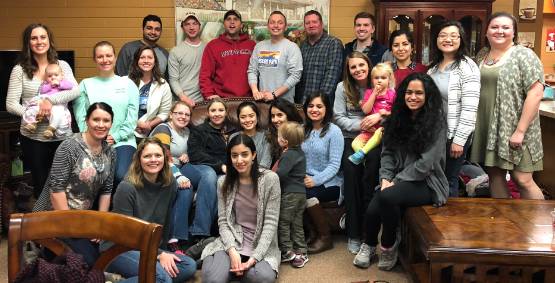
The size of the program promotes a congenial, affable, and collaborative environment. The residents and their families are a close-knit group, enjoying meaningful relationships both inside and outside of the workplace. This West Texas warmth is reflected in their interactions with the staff.
The excellent training that our residents receive is reflected in the number of board certified pediatricians who have completed the three-year program. Our graduates have been extremely successful in academic medicine, in the practice of general pediatrics, and in subspecialty medicine, with successful placement of residents across the United States. I am very honored to be a part this residency training program and hope that the tradition of excellence continues into the future.
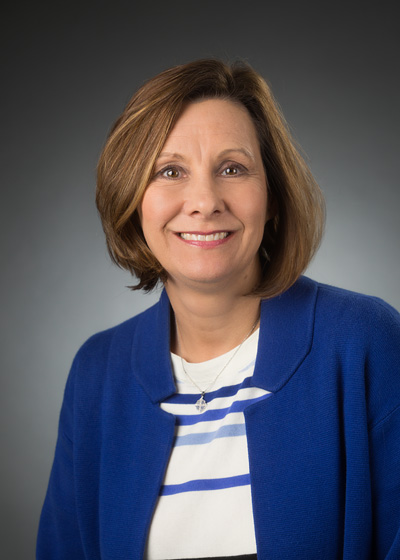
Tammy Camp, MD
Pediatrics Residency Director
Professor Pediatrics
Tuesday Afternoon Educational Conference
Each week, residents have a protected 3-4 hour block devoted to lectures and small
group discussions. This afternoon is protected time and residents are excused from
all clinical duties. The didactic blocks are structured as an 18-month curriculum
which covers all areas of general pediatrics. During residency, each resident will
have gone through two cycles of the curriculum.
Clinical Simulation
Once per quarter, the residents spend a Tuesday afternoon in the SimCenter. The residents
work in teams to evaluate and treat simulated patients in clinical scenarios. These
scenarios are designed and observed by inpatient pediatric faculty. Faculty debriefs
the resident teams after each scenario regarding medical knowledge and application,
team work, and communication.
Residents as Teachers
Each resident is responsible for the teaching of a CLIPP case to the medical students
each clerkship. This experience is in conjunction with the faculty mentor. Evaluations
from the medical students are collected following each of these sessions. The faculty
mentor provides immediate feedback to the resident regarding their teaching skills.
Morning Report
Morning report is held three days per week and is structured as a case conference.
Interesting cases are presented by medical students and residents, which are discussed
by the audience of faculty, residents, and students. Evidence Based Medicine presentations
are monthly. Interns present a PICO question and seniors present Journal Club. Evidence-based
medicine resources and statistical analysis are emphasized in these sessions.
Morbidity and Mortality
A morbidity and mortality conference is held at the end of each block during Morning
Report. Residents and faculty discuss cases from the previous block.
Obstetrics and Neonatology/Pediatrics
An obstetrics and neonatology/pediatrics conference is held monthly during morning
report. A case is presented from the obstetric and then the neonatology perspective.
This provides an opportunity for collaboration and discussion.
Grand Rounds
Grand rounds are held weekly on Fridays at noon and highlight topics of interest to
practicing pediatricians, both generalists and sub-specialists.
Pediatric Post Graduate Conference
All residents attend the annual Pediatric Post Graduate Conference. The conference
is sponsored by the Texas Tech University Health Sciences Center Department of Pediatrics.
The purpose of this local conference is to provide health care professionals with
recent and continuing advances in the field of pediatrics.
Quality Improvement Grand Rounds
At the end of each academic year, PGY2 and PGY3 residents present their QI projects
in a Grand Rounds setting. All residents and pediatric faculty attend QI Grand Rounds.
The residents each participate in a longitudinal QI project as part of their individualized
curriculum and QI Grand Rounds provides a forum for presenting progress and discussing
future PDSA cycles with faculty feedback.
Continuity of Care Clinic
"Raider Clinic," or Continuity of Care Clinic (COC), is one of the most appreciated aspects of our pediatric residency training. One half-day per week, each resident, with supervision by an attending physician, sees a panel of patients that they will continue to follow during the duration of their three years of training. Raider Clinic is a unique stand-alone, resident-run pediatric clinic founded in July 2010. Dedicated Pediatric faculty are assigned to Raider Clinic to provide optimum supervision and training. Our residents are exposed to all aspects of the outpatient care they provide including billing and coding and referral processing. Clinic operation meetings are held quarterly with the nurses and ancillary support staff during Tuesday Conference to further engage the residents in practice management.
Each resident is assigned one half day clinic per week which remains the same day of the week throughout the academic year. Residents are absent from their clinic only during night shift rotations and one week during ward rotations. They follow their patients throughout their residency as the primary care physician. Our residents take pride in their clinic and truly establish long lasting relationships with patients and families.
Inpatient Sites
University Medical Center
UMC is supported by the taxpayers of Lubbock County. It serves as the primary teaching hospital for the Lubbock campus of the Texas Tech University Health Sciences Center School of Medicine and affiliated residency programs. The UMC Children’s Hospital is housed on the second floor of UMC and includes a 27-bed pediatric ward and 15-bed Pediatric Intensive Care Unit. UMC Children’s Hospital is a Children’s Miracle Network Hospital. The UMC East Tower houses the Family Birth Center and the 40-bed Neonatal Intensive Care Unit. The UMC electronic health record is integrated throughout the Texas Tech Physicians and UMC PNS outpatient clinics. The hospital is physically connected to TTUHSC, providing easy access for residents and patients.
Over their three years of residency, pediatric residents spend three blocks on UMC inpatient ward service, four blocks on night shift, two blocks in the NBN, and three blocks in the NICU. Residents perform their night and weekend call overage at UMC.
Covenant Children's Hospital
Covenant Children’s Hospital is a privately funded hospital <2 miles from TTUHSC. This 73-bed facility serves as the second teaching hospital for our residents. Covenant Children's Hospital is part of Covenant Health System—a member of St. Joseph Health System. It was founded in 1998 through the merger of two of Lubbock's health care facilities. St. Mary of the Plains and Lubbock Methodist Hospital System and has grown to become the only licensed, full-service pediatric hospital in our region, and one of only eight in the entire state of Texas. In February 2015, Covenant Children’s Hospital partnered with Texas Children’s Hospital, a leader in pediatric cardiac care. Texas Children’s cardiac surgeons travel to Lubbock to perform cardiac surgery and our patients receive the best possible care, integrated with the Texas Children’s cardiac program, while remaining close to home.
Residents spend two block rotations on this inpatient service the first year of residency, one block in each of their second and third year of residency. They spend one block in the PICU in both their second and third year. All emergency medicine rotations are completed in the Covenant Children’s Hospital Emergency Room. Residents on subspecialty services often perform consults at Covenant Children’s Hospital as well.
Outpatient Sites
Texas Tech Physicians of Lubbock
Texas Tech Physicians of Lubbock includes 3 general pediatric clinics at the Medical Pavilion, the Medical Office Plaza, and Health Point, with approximately 20,000 annual visits. Subspecialty clinics include cardiology, genetics, endocrinology, infectious diseases, nephrology, neurology, and pulmonology. These subspecialty clinics and a general clinic are housed at the Medical Pavilion. The Pavilion has 31 patient care rooms as well as a treatment room with the capability to perform several general pediatric tests such as pulmonary function testing, urine analysis, Hemoglobin A1C, EKG, basic blood work, etc.
Cleft Palate Clinic
The Cleft Palate Clinic is a multi-specialty collaboration in which infants and children with cleft palates are followed, and their care coordinated, by several specialists including pediatric ENT, plastic surgery, speech pathology, pediatrics and dentistry.
This effort is made to maximize the quality of care offered to this small yet unique subset of the pediatric population.
UMC Physician Network Services (PNS)
Our strong relationship with the UMC system allows our residents to rotate out in community clinics with the Pediatric Associates of Lubbock. Our clinical faculty associates provide a valued clinical experience during the Development Rotation and Community Rotation.
Hart School-Based Clinic
Residents on subspecialty, adolescent and ambulatory pediatrics rotations travel to Hart, Texas, to conduct a rural school-based clinic. Hart is a small farming community of about 1,200 people 65 miles north of Lubbock. A total of approximately 400 children are expected to use the service of this clinic. This clinic is located in a Health Professional Shortage Area, and the entire county has no available pediatricians.
The TTUHSC Department of Pediatrics has established an affiliation with this clinic, which calls for a primary care pediatrician to attend once a week. The school-based clinic offers primary care services to children from pre-kindergarten through high school. These services include EPSDT, minor sick care, adolescent counseling and health education. University Medical Center provides laboratory and pharmacy assistance. Also, a nearby hospital at Dimmitt will provide radiological backup support. The ongoing operation is governed by an advisory board consisting of teachers, community members and a representative of the Department of Pediatrics.
View our current residents of the Texas Tech University Pediatric Residency Program.
Meet our accomplished General Faculty and Subspecialist Faculty, whose diverse specialties and talents advance education and serve the Lubbock community and beyond here.
Got Questions?
We're here to help. Contact us if you have questions.
Audra Bowman, MD, MHA, FAAP
Associate Professor
Program Director
Department of Pediatrics
Summer Davies, MD
Associate Professor
Associate Fellowship Program Director
Department of Pediatrics